 Wondrlink Foundation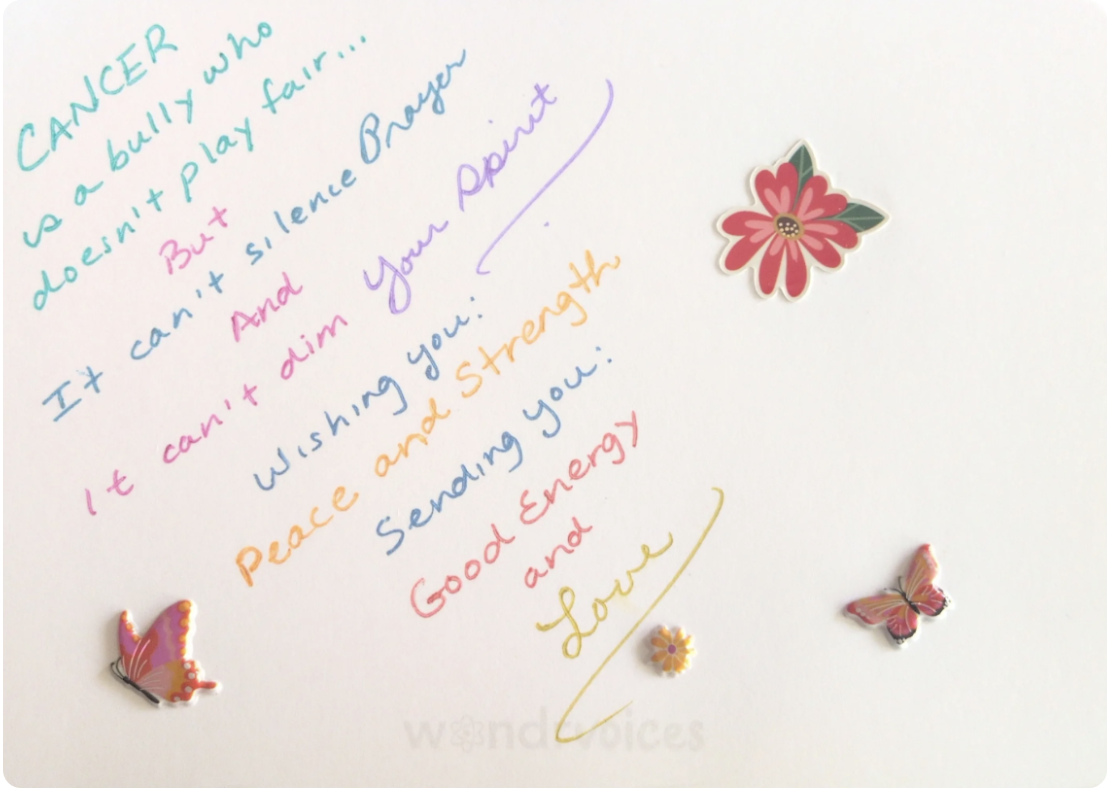
The Weight of Silence
There's a particular kind of silence that settles in when someone gets sick. You see it in waiting rooms, in hallways outside hospital rooms, in the spaces between text messages that take longer and longer to send. People go quiet not because they don't care, but because they care so much that they're paralyzed by the fear of saying the wrong thing.
Ask anyone who's faced a serious illness, and they'll tell you about this silence. Friends who stopped calling. Text messages that got shorter, then less frequent. Family members who seemed to vanish right when they were needed most. Not out of cruelty, but out of fear. Fear of saying something wrong. Fear of making things worse. Fear of confronting mortality in someone they love.
But here's what patients say, again and again: the silence hurts more than almost anything else about being sick. More than the awkward comments. More than the clumsy attempts at comfort. The silence is what wounds deepest.
The Myth of Perfect Words
Here's what happens: people wait. They wait until they know exactly what to say. Until they can craft the perfect message that will somehow make things better, or at least not make them worse.
Most of us have done this. Drafted and deleted texts to friends going through hard times, convinced that our words weren't good enough. That we'd somehow make their pain worse by saying the wrong thing. So we said nothing at all.
But here's the truth. There are no perfect words. There never have been. Nobody is going to text a sentence so beautifully constructed that it cures cancer or erases fear. That's not how any of this works.
What matters isn't eloquence. What matters is presence. A card with a wobbly drawing from a friend's kid. A note scribbled on the back of a coffee shop receipt. Three words: "I'm with you." That's it. That's everything.
What Patients Actually Remember
When someone is sick, time moves differently. Treatment days blur together. Weeks get lost. But patients remember, with startling clarity, who showed up and who disappeared.
They don't remember most of what people said. They couldn't tell you the exact wording of any card they received. But they remember the neighbor who left soup on the porch every Thursday for two months. They remember the old friend who called every single Sunday, even when they didn't pick up, just to leave a voicemail saying she was thinking of them. They remember the coworker who sent a playlist titled "Songs That Don't Suck" with zero explanation.
None of these people said anything profound. None of them had answers. They just kept showing up, however imperfectly, and that made all the difference.
The Stranger's Gift
Sometimes the most unexpected messages hit the hardest. One patient told us about a card she received from someone she'd never met. Handwritten, a little messy, just a few lines saying they hoped she was having an okay day. No pressure, no platitudes, no "everything happens for a reason." Just a stranger taking thirty seconds to acknowledge that she existed and that her existence mattered to them.
She still has that card. She kept it in her bag during chemo appointments. There's something strangely powerful about kindness from strangers. It's stripped of history, obligation, and awkwardness. When someone who owes you nothing takes a moment to say "I see you," it carries a different kind of weight.
That's why programs like WondrVoices exist. People write cards or record short video messages for patients they'll never meet. Some do it at community events. Others leave handwritten notes at designated spots in coffee shops, bookstores, and libraries. No pressure to fix anything. No need for profound wisdom. Just humans showing up for other humans in the simplest way possible.
You can learn more about how it works at wondrvoices.com. But honestly, the mechanism matters less than the principle: small gestures of presence add up. They accumulate. They remind someone in their hardest moment that the world still has gentleness in it.
Breaking Through the Isolation
Serious illness is lonely. Bone-deep lonely in a way that's hard to explain unless you've lived it. The body becomes unfamiliar. The future becomes uncertain. And the people around often don't know how to bridge that gap, so they hang back, waiting to be told what's needed.
But sometimes patients don't know what they need. Sometimes they're too tired to ask. Sometimes they just want someone to reach across the silence without being invited.
A woman we spoke with kept a card on her bedside table throughout treatment. Nothing fancy, just a note from a stranger through WondrVoices. "It reminds me I'm not alone in this," she said. Not because the words were special, but because someone, somewhere, had bothered to write them at all.
That's what presence does. It breaks through the isolation that illness creates. It reminds people that even in their hardest moments, they're connected to a wider circle of humanity than they realize.
Your Voice Matters
If you're reading this and there's someone in your life you've been meaning to reach out to, consider this your permission slip. You don't need to be a poet. You don't need to have the answers. You don't need to wait until you've found the right words because the right words don't exist.
Send the text. Mail the card. Leave a voicemail. Write a note for a stranger at a WondrSpot. The format doesn't matter. What matters is that you're willing to reach across the silence and say, in whatever words come naturally, "I'm here."
Maybe they won't respond. Maybe they won't know what to say either. That's okay. You're not doing it for a response. You're doing it because being seen matters. Because isolation kills something in us, and presence, even imperfect presence, brings it back.
Patients keep every card. Not because they're beautifully written. Because each one is proof that someone, somewhere, thought of them. That they weren't as alone as they felt. That's a gift nobody should have to earn and nobody should be afraid to give.
In the end, what breaks through silence isn't eloquence. It's courage. The courage to show up, however imperfectly, and let someone know they're not forgotten.
Topics: