 Ildiko Csiki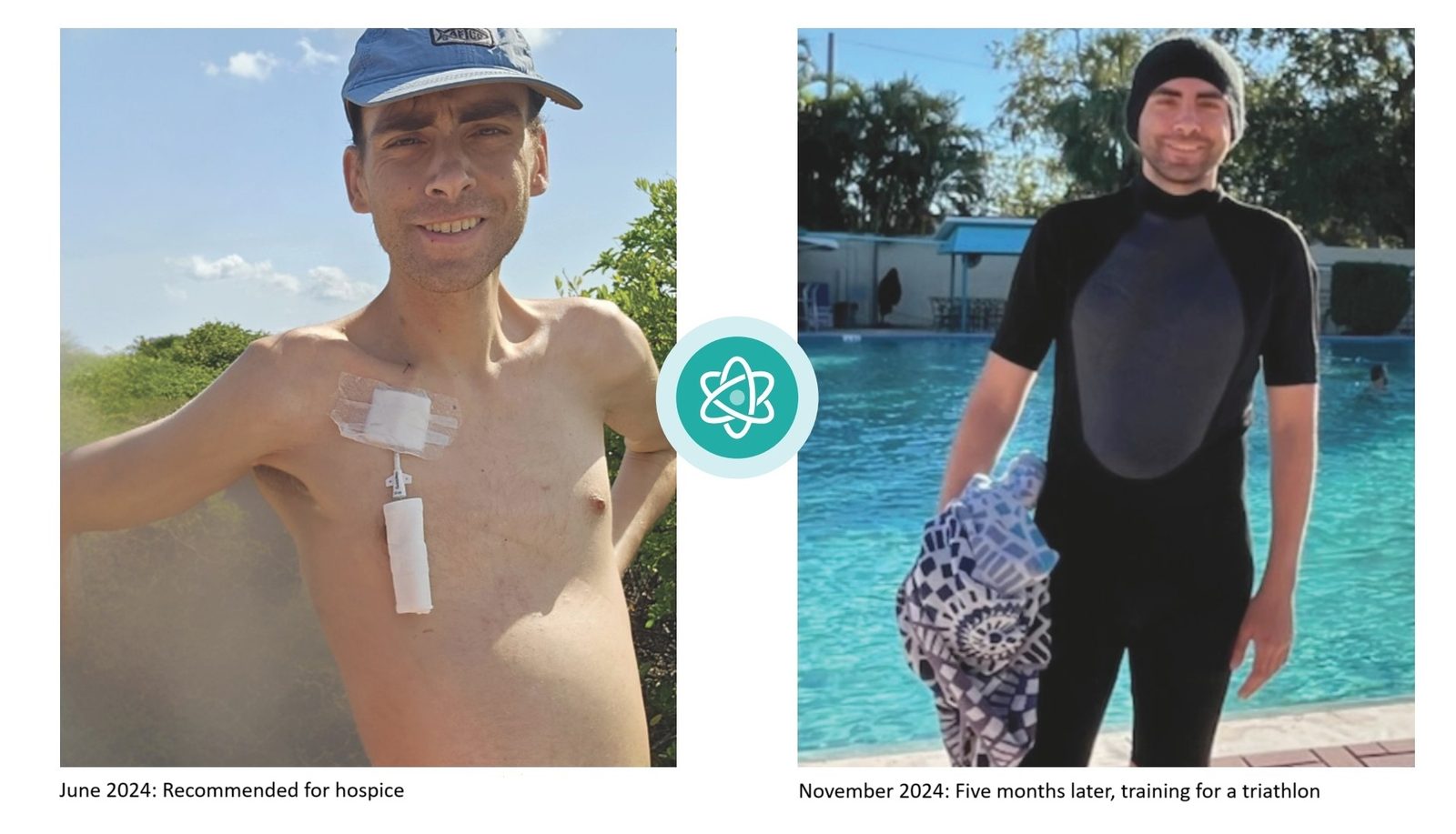
Will was thirty when his family was told there were no options left.
He had completed the standard course of treatment for aggressive liver cancer. He had enrolled in a clinical trial. The disease progressed anyway.
He was being treated at one of the top NCI-designated cancer centers in Florida. Some of the best people in the country, at one of the best places to be. And even there, they had reached the end of what they could do. The recommendation was hospice.
That is worth sitting with for a moment. This was not a case of inadequate care or a missed referral. Will had access to excellent medicine, and excellent medicine had run out of standard answers for him.
What happened after that is the reason the Wondrlink Foundation exists. Not because of how it turned out, but because of what it took.
What it took
Will's father, Dr. George Monlux, is a physician. He knew how to read the literature. He knew what questions were worth asking. He spent months doing the research himself.
Even that was not enough on its own.
What made the difference was that the family also had someone who understood this particular territory. Not a member of the care team. Someone who took it on privately, who knew where investigational therapies live and how they are accessed, who helped identify what might be worth pursuing, who found a community physician willing to treat Will with an unapproved drug, and who was willing to vouch for him to the people who controlled it.
Two people, then. A physician father with the training to understand the science and the persistence to keep going. And a guide who had walked this ground before and knew which doors existed.
Will was lucky. That is the honest word for it.
Why this is hard for everyone
Getting access to an investigational drug outside a trial is not a normal transaction, and it is worth understanding why.
Providing a drug to a single patient this way sits outside what a developer is set up to do. It is not part of their trial protocol. It is not something they are required or obligated to offer. Every such request means supply diverted, safety monitoring arranged, regulatory paperwork prepared, and a set of risks accepted that the company did not have to take on. Some companies have programs for this. Many do not. And even where the willingness exists, the path runs through agreements, approvals, and processes that were not built for someone whose disease is moving.
In Will's case there were challenges along the way. Access was interrupted and had to be restored. It took patience, persistence, and people willing to keep pushing when the process stalled.
Which raises the question that started this Foundation.
The realization
Even with a physician in the family. Even with someone experienced guiding them. Even with people who knew what to ask, who to ask, and how to keep asking when the answer was slow.
It was still this hard.
So what happens to the family that has none of that?
Not a family short on money or connections, though those matter. A family that has simply never been told any of this is possible. That doesn't know expanded access exists. That has never encountered the phrase "compassionate use." That is told there are no options and understands it to mean there is nothing left, because nobody explained that "no more standard options" and "no more options" are not the same sentence.
That family doesn't lose because they tried and it didn't work.
They lose because nobody told them there was anything to try.
That is not a medical problem. It is an information problem. And an information problem is something a small organization can actually address.
What we built instead
The Wondrlink Foundation was formed after all of this, and deliberately not as a service that repeats it.
We are not a clinical team. We do not review medical records, recommend treatments, identify trials for anyone's case, or approach drug developers on a patient's behalf. Those decisions require a clinical relationship, and they belong to patients and their own physicians.
What we do is make sure the information exists, in plain language, free, for anyone who goes looking. How clinical trials actually work. What expanded access is and how it differs from Right to Try. What to ask your oncologist. Where to search yourself, and how to read what you find.
We cannot give every family a physician father and an experienced guide. What we can do is make sure that no family hears "there are no options" as the end of the conversation, when what it really means is that the next part is harder and nobody has explained it to them.
Will
Will is a founding member of our board of directors.
He is also the reason WondrVoices exists. He knows the inside of that experience: the waiting, the isolation, the particular loneliness of a fight the people around you cannot follow. WondrVoices came out of his conviction that the human part matters as much as the informational part, and that a card from a stranger does something no amount of education can.
His name is on our board because his experience is in our purpose.
Wondrlink Foundation provides educational information only. We do not provide medical advice, diagnosis, or treatment recommendations, and nothing in this account describes services the Foundation offers. All clinical decisions described here were made by treating physicians before the Foundation was formed. Decisions about treatment belong to patients and their own doctors. Will Monlux is a member of the Foundation's board of directors.
Topics: